
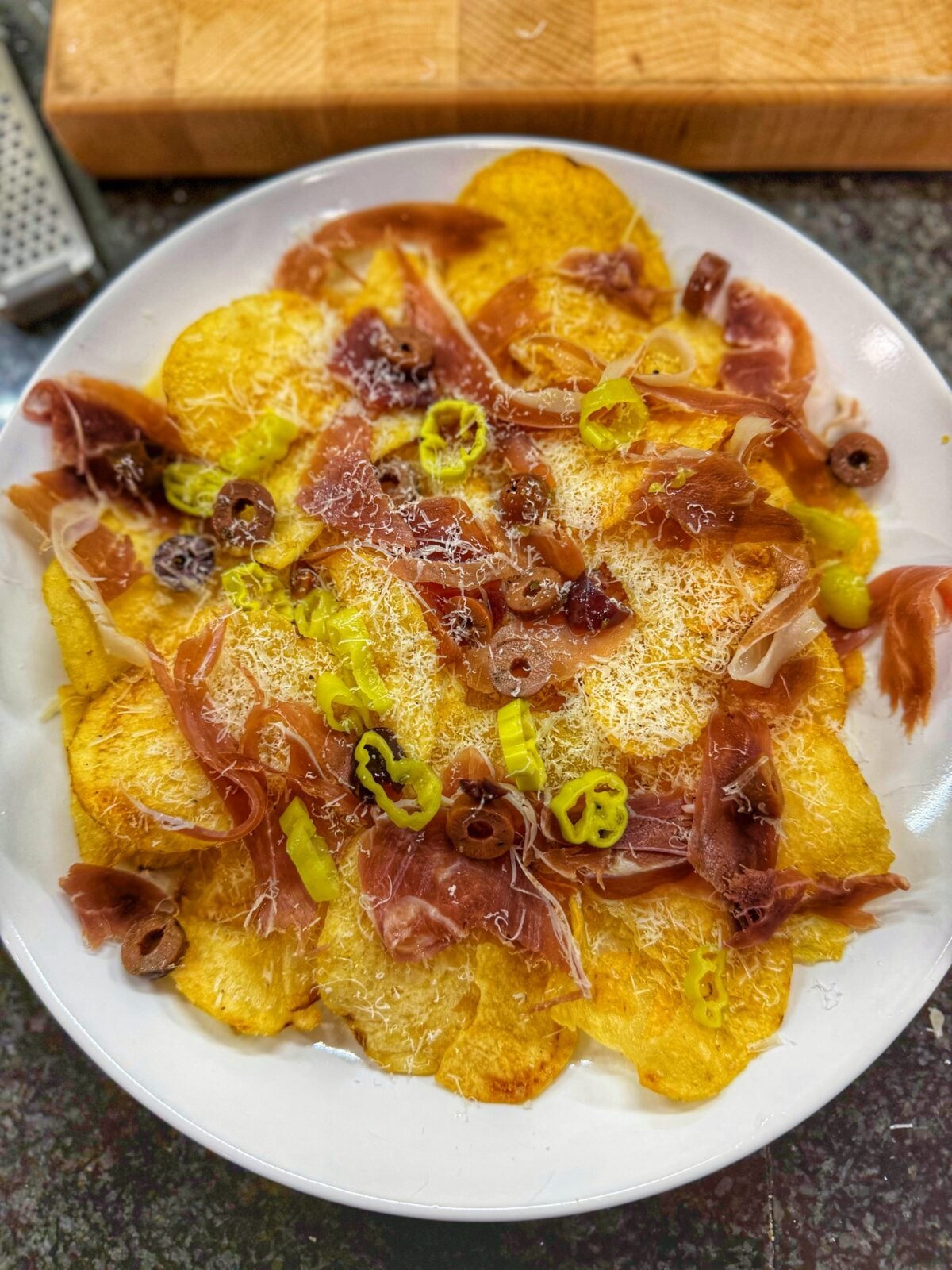
These Charcuterie Nachos are a salty, crispy, low-effort take on a classic charcuterie board, built on warm kettle chips and finished with prosciutto, finely grated cheese, and briny toppings. They’re simple, satisfying, and feel gourmet without requiring much time or cleanup.
When Charcuterie Meets Nachos
Charcuterie boards have earned their place as a go-to for entertaining and casual dinners alike. They feel elevated without being fussy, they rely on quality ingredients instead of complicated technique, and they’re endlessly flexible depending on what you have on hand. Nachos, on the other hand, are the definition of comfort food: crispy, salty, and meant to be shared.
Charcuterie nachos sit right at the intersection of those two ideas. Instead of laying everything out on a board, the components are layered over warm chips, creating a dish that’s easy to assemble and easy to enjoy. There’s no pressure to make it perfect, no special equipment required, and no long list of steps to follow. It’s the kind of recipe that feels intentional but still relaxed.
This version is especially simple, which makes it perfect for the new year. Whether you’re easing back into routines, looking for quick dinner ideas, or just want something snacky that still feels like a meal, these charcuterie nachos fit the bill.
What Are Charcuterie Nachos?
Charcuterie nachos take the familiar structure of nachos and swap in flavors inspired by a traditional charcuterie board. Instead of tortilla chips and melted shredded cheese, you start with a sturdy chip and layer on cured meat, firm cheese, and something briny or pickled for contrast.
The goal isn’t to melt everything together into one uniform layer. Instead, each ingredient keeps its identity. Some bites are heavier on cheese, others lean salty or tangy, and that variety is part of what makes the dish interesting. It’s casual food with a little more depth.
Because the format is so flexible, charcuterie nachos are also a great way to use high-quality pantry items in a low-pressure way. You don’t need a dozen components or elaborate prep. A few well-chosen ingredients are more than enough.
Why This Works as a Weeknight Dinner or Easy Entertaining Option
One of the biggest advantages of this recipe is how adaptable it is. It can be a quick dinner when you don’t feel like cooking, a snack to share with a drink, or an easy appetizer when people stop by. There’s no timing stress, no juggling multiple dishes, and no concern about things cooling off too quickly.
It also scales easily. You can make a small plate for two people or spread everything out on a larger tray if you’re serving a group. Since the only “cooking” involved is briefly warming the chips, it’s easy to add more as you go.
For busy households, this kind of recipe is invaluable. It’s fast, forgiving, and still feels thoughtful. You’re not defaulting to something boring or overly processed. You’re assembling a dish that’s built on good ingredients and solid flavors.
The Foundation: Wagyu Beef Tallow Kettle Chips
The base of any nacho-style dish matters, and in this recipe, the chips are doing a lot of the work. Using Snake River Farms Wagyu Beef Tallow Kettle Chips brings an extra layer of richness that you don’t get from standard potato chips.
These chips are thick and sturdy, which means they hold up well once topped. They don’t immediately crumble under the weight of cheese or prosciutto, and they maintain their crunch even after being warmed. Because they’re cooked in Wagyu beef tallow, they also have a deeper, more savory flavor that pairs naturally with charcuterie-style ingredients.

In this recipe, the chips are warmed briefly in a low oven. This isn’t about browning or crisping them further. It’s simply about heating them through so they’re ready to receive the cheese. That warmth helps the grated cheese soften and cling to the chips without fully melting or becoming greasy.
Ingredients for Charcuterie Nachos
This recipe keeps things intentionally minimal. Everything used is visible in the photos, and nothing extra is required.
Ingredients used here include kettle-style potato chips, prosciutto, a wedge of hard cheese that’s finely grated, sliced pepperoncini, and sliced olives.
Each ingredient serves a clear role. The chips provide crunch and structure. The prosciutto adds salt and softness. The grated cheese brings richness without overpowering the dish. The pepperoncini and olives add acidity and briny contrast that cuts through the fat.

Because everything is already prepared, there’s no chopping or cooking beyond warming the chips. This is more about assembly than technique, which is part of what makes it so approachable.
How to Make Charcuterie Nachos
Start by preheating your oven to 300 degrees. Spread the kettle chips out on a baking sheet in an even layer and place them in the oven for about five minutes, just until warmed through. You’re not trying to toast them further, just gently heat them.
Once the chips are warm, transfer them to a plate or serving dish. While the chips are still hot, use a microplane or fine grater to grate the cheese directly over the top. Finely grating the cheese is key here. It allows the cheese to soften slightly from the heat of the chips and distribute evenly without clumping.
Next, tear the prosciutto into pieces and scatter it over the chips and cheese. There’s no need to be precise. This dish works best when it looks casual and a little rustic.
Finish by adding sliced pepperoncini and sliced olives over the top. These briny elements balance the richness of the chips, cheese, and prosciutto and keep the dish from feeling too heavy.
Serve immediately while the chips are warm and the cheese is soft.
Why Finely Grated Cheese Makes a Difference
Using finely grated cheese instead of shredded cheese changes the texture of this dish in a big way. When cheese is grated very finely, it melts and softens more easily, even with minimal heat. Instead of forming thick strands or heavy layers, it lightly coats the chips.
This approach works especially well for charcuterie nachos because it keeps the dish from becoming overly rich. The cheese is present in every bite, but it doesn’t overwhelm the other ingredients. It also helps everything stick together just enough without turning into a fully melted layer.
A microplane grater is ideal for this, but any fine grater will work. The goal is a light, even dusting rather than large shreds.

The Role of Prosciutto in This Dish
Prosciutto brings a completely different texture than the chips and cheese. It’s soft, salty, and delicate, which creates contrast against the crunch of the chips. Tearing it instead of slicing it keeps the presentation relaxed and helps it distribute more evenly.
Because the prosciutto is added after the chips come out of the oven, it stays silky rather than crisping up. This keeps it true to its role as a charcuterie element rather than turning it into a cooked topping.

The Importance of Briny Toppings
The sliced pepperoncini and olives play an important role here. Without them, the dish would lean heavily toward rich and salty. The acidity and brine from these toppings cut through the fat and keep each bite balanced.
They also add visual contrast and texture. The pepperoncini bring a mild heat and tang, while the olives add depth and saltiness. Together, they round out the dish and make it feel complete.
Charcuterie Nachos as a Concept
One of the reasons charcuterie nachos work so well is because they’re flexible by design. While this version sticks to a very specific set of ingredients, the concept can be adapted endlessly.
Different chips, different cured meats, and different cheeses can all work within the same basic structure. The key is choosing ingredients that complement each other and keeping the overall balance in mind.
This format also makes it easy to adjust portions and flavors depending on who you’re serving. It’s a dish that invites customization without requiring extra effort.
When to Serve Charcuterie Nachos
These charcuterie nachos work in a lot of different settings. They’re easy enough for a casual weeknight dinner, especially when you want something quick and satisfying. They also work well as a shared snack or appetizer when friends come over.
Because there’s no complicated timing involved, they’re low-stress to serve. Everything comes together quickly, and the dish is best enjoyed right away, which makes it ideal for relaxed gatherings.
Other Gameday Snack Ideas to Enjoy
If you loved this idea for Charcuterie Nachos, here are some other ideas for recipes you can try. With the big gameday coming up soon, now is the time to perfect your gameday spread!
Final Thoughts
Charcuterie nachos are proof that good food doesn’t need to be complicated. With a handful of quality ingredients and a simple approach, you can create something that feels thoughtful, satisfying, and a little indulgent without spending much time in the kitchen.
This version keeps things straightforward, letting the chips, prosciutto, cheese, and briny toppings speak for themselves. It’s a recipe you can return to again and again, whether you make it exactly as written or use it as inspiration for whatever you have on hand.
If you’re looking for an easy way to bring charcuterie-style flavors into a casual, shareable dish, these charcuterie nachos are a great place to start.

Charcuterie Nachos with Wagyu Beef Tallow Potato Chips

Equipment
- Baking sheet
- Oven
- Microplane or fine grater
- Plate or serving dish
Ingredients
- Kettle-style potato chips
- Prosciutto
- Hard cheese finely grated
- Sliced pepperoncini
- Sliced olives
Instructions
- Preheat the oven to 300°F.
- Spread the potato chips out on a baking sheet in an even layer.
- Place the chips in the oven for about 5 minutes, just until warmed through.
- Transfer the warm chips to a plate or serving dish.
- While the chips are still hot, finely grate the cheese over the top using a microplane or fine grater.
- Tear the prosciutto into pieces and scatter it evenly over the chips and cheese.
- Finish by topping with sliced pepperoncini and sliced olives.
- Serve immediately while the chips are warm and the cheese is soft.

Leave a Reply